Explore Our Services

Person walking along the horizon during a vibrant sunset with orange, red, and purple sky.

CBT

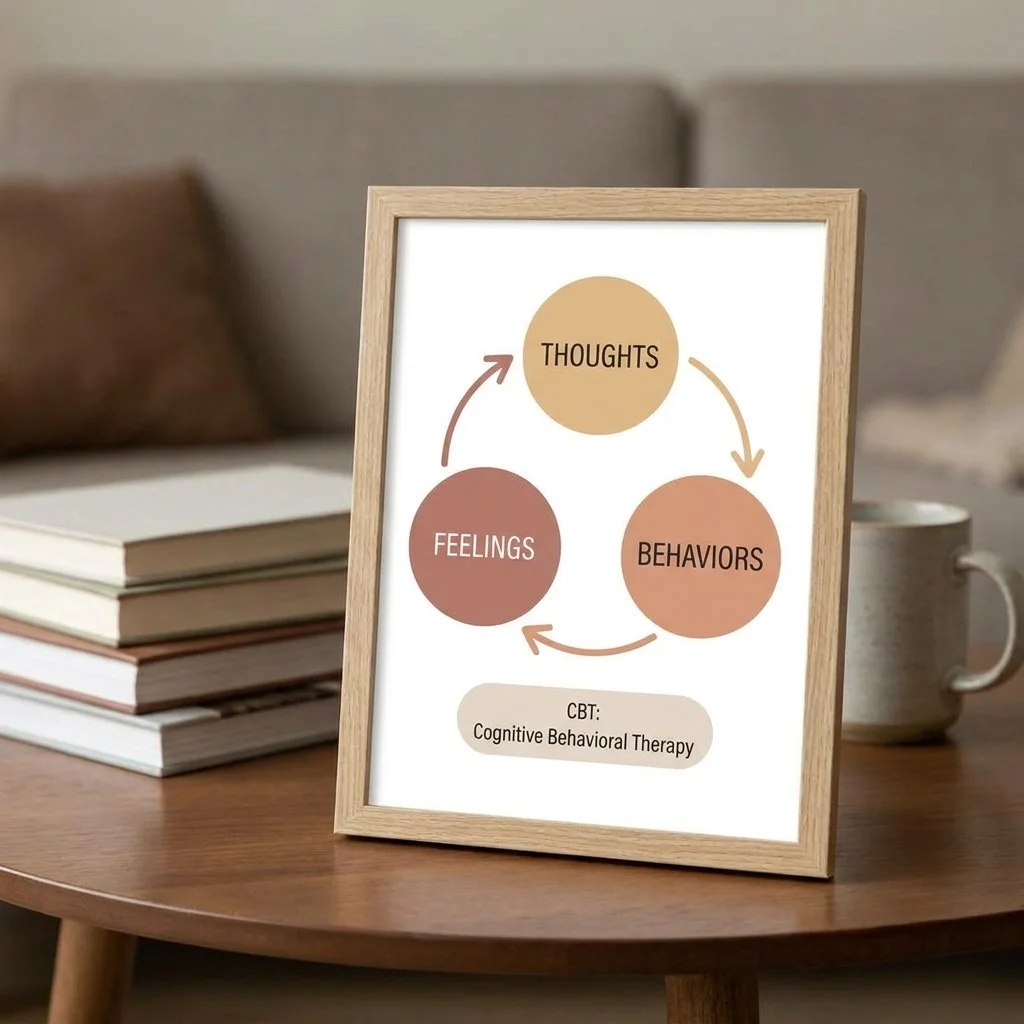
A framed infographic showing the cycle of thoughts, feelings, and behaviors, with a note about cognitive behavioral therapy (CBT) at the bottom.

Cognitive Behavioural Therapy ( CBT ) is a form of psychological therapy that is highly effective for a wide range of mental health conditions. Fundamentally, CBT is based on the principle that our thoughts, feelings, and behaviours are closely interconnected - changing one can have a significant affect on the others.

CBT is not a “one-size-fits-all” approach. It is personalised and tailored to the unique challenges each person faces. The focus is on building self-awareness and giving people practical cognitive and behavioural strategies to help them cope.

ACT

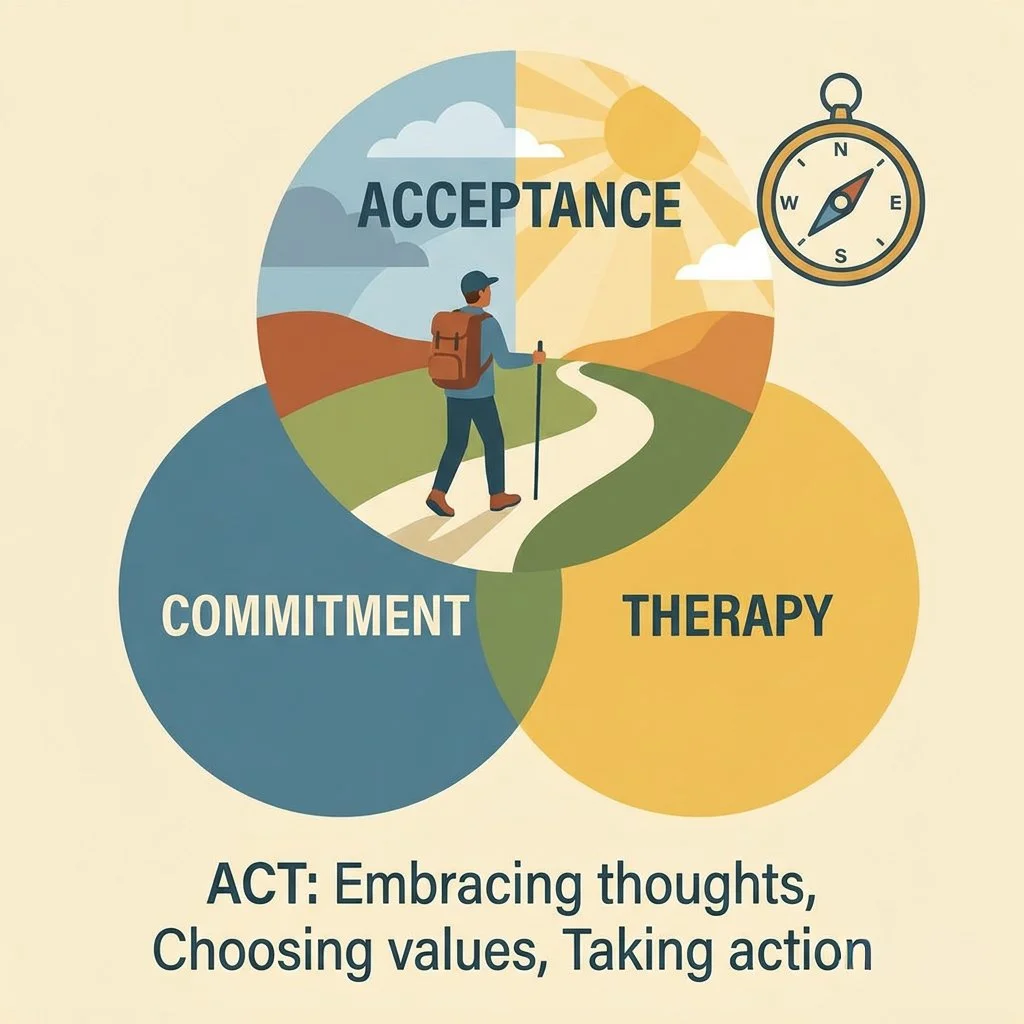
A person hiking on a trail in a landscape with mountains, clouds, and sun, to symbolize acceptance, commitment, and therapy; a compass showing north.

Acceptance and Commitment Therapy (ACT) builds on the principles of CBT while intergrating newer ideas and methods such as mindfulness and acceptance. it is structured around six core processes.

ACCEPTANCE: Opening up to and actively embracing thoughts, feelings, and physical sensations that you might otherwise try to avoid or push away.

COGNITIVE DEFUSION: Learning to step back and observe your thoughts, memories, and feelings rather than getting caught up in them or treating them as absolute facts.

BEING PRESENT: Staying mindfully focused on the here and now, instead of dwelling on the past or worrying about the future.

VALUES: Connecting with what matters most to you in life. These are your guiding principles - the beliefs that help you take meaningful, consistant action in line with what you care about.

SELF-AS-CONTEXT (or the Observing Self): The part of you that can notice what you are experiencing without becoming attached to it or overwhelmed by difficult thoughts and feelings.

COMMITTED ACTION: Making choices and taking steps that align with your values, so myou can live a full and meaningful life - even when things get difficult.

CBT FOR SPORTS PERFORMANCE

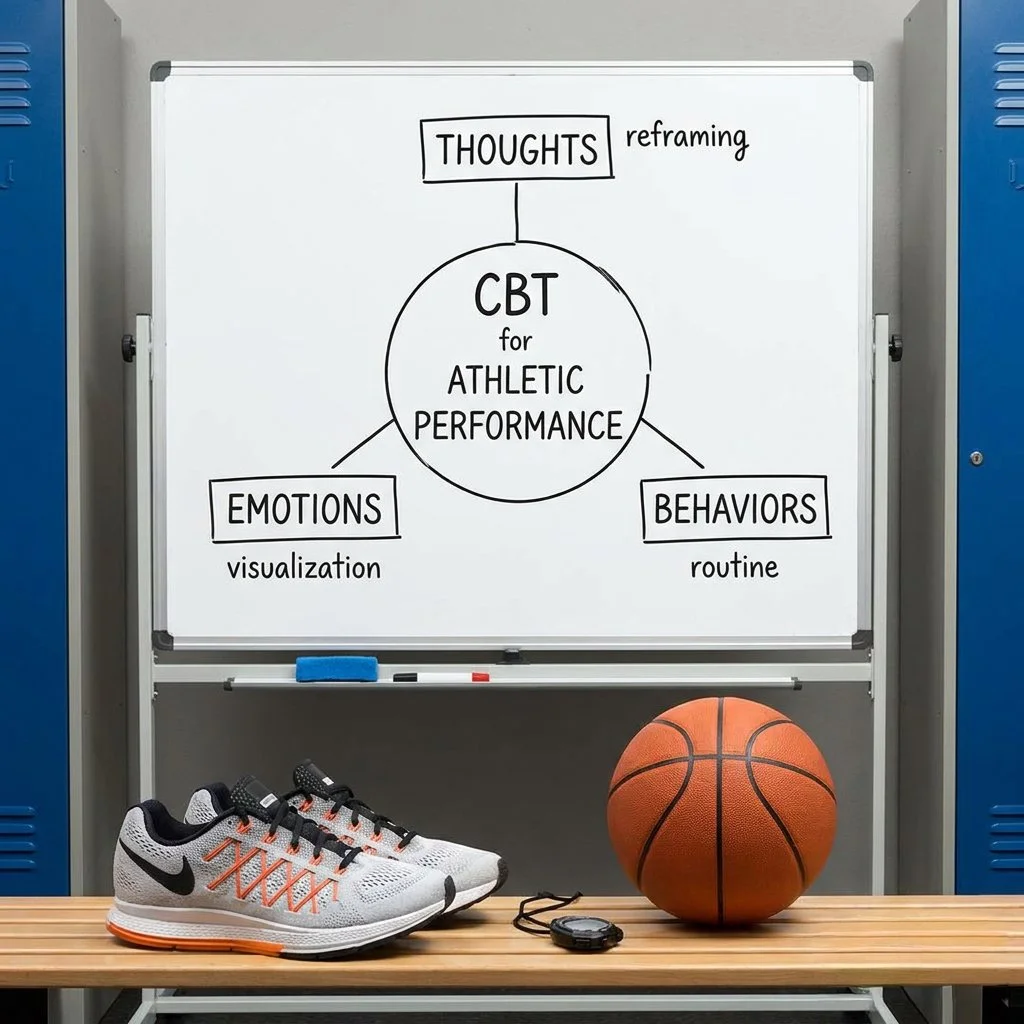
Whiteboard with a diagram about cognitive behavioral therapy for athletic performance, showing connections to thoughts, emotions, and behaviors, with a pair of Nike running shoes, a basketball, and a stopwatch on a wooden bench in front of it.

Mental health and physical health are closely linked, and good psychological wellbeing is strongly associated with better performance in sport. Athletes regularly face situations that test not only their physical skills but also their mental strength and resilience.

CBT for sports performance helps athletes understand their own thinking patterns. This, in turn, allows them to manage their emotions and behaviours more effectively - so they can perform at their best.

Beyond performance itself, CBT also helps athletes handle setbacks, such as injury, and maintain a positive, focused mindset while recovering and returning to their sport.